




The workplace is evolving faster than ever. New technologies, changing business models, and shifting workforce expectations are transforming how organizations operate. As a result, the traditional approach to professional education, where employees attend occasional training sessions or complete lengthy courses outside their daily responsibilities, is becoming less effective.
Today’s professionals need knowledge and skills that can be applied immediately. Organizations, meanwhile, need employees who can adapt quickly to changing demands. This has led to the rise of a new learning model known as Learning in the Flow of Work.
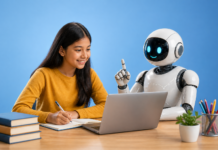
Rather than separating learning from daily tasks, this approach integrates education directly into the employee’s workflow. Learning becomes a continuous, accessible, and relevant experience that supports performance in real time. As organizations seek to build agile and future-ready workforces, learning in the flow of work is emerging as the future of professional education.
What Is Learning in the Flow of Work?
Learning in the flow of work refers to the practice of providing employees with learning opportunities while they perform their jobs. Instead of requiring workers to leave their tasks to attend formal training sessions, learning resources are delivered within the tools, systems, and processes they already use.
This model emphasizes immediate problem-solving and skill development. Employees can access guidance, tutorials, knowledge bases, AI-powered recommendations, and microlearning content exactly when they need it.
The concept recognizes a simple reality: people often learn best when they can immediately apply new information to real-world situations.
For example, a sales professional might receive AI-generated coaching suggestions before a customer meeting. A software developer could access coding best practices within their development environment. A customer support representative may receive contextual knowledge articles while assisting a client.
In each case, learning becomes part of the work itself.
Why Traditional Professional Education Is Facing Challenges
For decades, professional development relied heavily on classroom training, workshops, seminars, and lengthy online courses. While these methods still have value, they face several limitations in today’s business environment.
First, the pace of change has accelerated significantly. Skills that were relevant a few years ago may quickly become outdated. Employees often need information immediately rather than waiting for scheduled training sessions.
Second, information overload makes it difficult for learners to retain large amounts of content delivered in a single session. Research consistently shows that people forget much of what they learn if they do not apply it soon afterward.
Third, employees are increasingly expected to balance learning with demanding workloads. Finding time for traditional training programs can be challenging.
Learning in the flow of work addresses these challenges by delivering knowledge at the moment of need, improving both retention and application.
The Role of Technology in Flow-Based Learning
Technology plays a critical role in making learning in the flow of work possible. Modern learning platforms leverage artificial intelligence, automation, analytics, and integrations to deliver personalized learning experiences.
AI-powered systems can identify skill gaps, recommend relevant content, and provide contextual support based on employee activities. Learning management systems are increasingly evolving into learning experience platforms that prioritize personalized and continuous learning journeys.
Digital collaboration tools such as project management platforms, communication applications, and enterprise knowledge systems also contribute to flow-based learning by making information easily accessible.
Furthermore, advanced analytics allow organizations to track learning effectiveness and measure how knowledge contributes to performance outcomes.
As technology continues to improve, learning experiences will become even more intelligent, adaptive, and embedded within daily workflows.
Benefits for Employees
Learning in the flow of work offers significant advantages for employees.
1. Increased Accessibility
Employees no longer need to search extensively for information or wait for formal training sessions. Learning resources are available when and where they are needed.
2. Improved Knowledge Retention
When individuals apply newly acquired knowledge immediately, they are more likely to remember and retain it.
3. Personalized Learning Experiences
AI-driven learning platforms can tailor recommendations based on individual roles, goals, skill levels, and work activities.
4. Greater Engagement
Employees are more likely to engage with learning content when it directly addresses real challenges they face in their daily work.
5. Continuous Career Development
Instead of relying on occasional training programs, professionals can continuously build skills and competencies throughout their careers.
Benefits for Organizations
Organizations also stand to gain considerably from adopting this learning model.
1. Faster Skill Development
Employees can acquire and apply new skills more quickly, helping organizations respond rapidly to market changes.
2. Increased Productivity
Because learning is integrated into work processes, employees spend less time away from their responsibilities while still improving their capabilities.
3. Enhanced Workforce Agility
Organizations can adapt more effectively to emerging technologies, changing customer expectations, and evolving business requirements.
4. Better Return on Learning Investments
Learning initiatives become more closely aligned with business outcomes, making it easier to measure impact and demonstrate value.
5. Stronger Employee Retention
Employees are more likely to stay with organizations that invest in their professional growth and provide opportunities for continuous development.
The Growing Importance of Microlearning
One of the key enablers of learning in the flow of work is microlearning.
Microlearning delivers educational content in small, focused segments that can be consumed quickly. These lessons typically take only a few minutes to complete and focus on specific skills or concepts.
This approach aligns perfectly with modern work environments where employees often have limited time for extended training sessions.
Examples of microlearning include short videos, interactive guides, quick-reference documents, quizzes, podcasts, and AI-generated knowledge snippets.
By breaking complex topics into manageable pieces, organizations can improve engagement while supporting ongoing learning.
AI and the Future of Professional Education
Artificial intelligence is expected to further accelerate the adoption of flow-based learning.
AI-powered assistants can provide real-time coaching, answer questions, recommend learning resources, and guide employees through complex tasks. As these technologies become more sophisticated, learning experiences will become increasingly personalized and context-aware.
Organizations may soon deploy AI learning companions that continuously monitor skill development, identify knowledge gaps, and suggest targeted learning opportunities.
This shift will move professional education away from standardized training programs and toward highly individualized learning experiences tailored to each employee’s needs.
Building a Culture of Continuous Learning
Technology alone is not enough to make learning in the flow of work successful. Organizations must also cultivate a culture that values continuous learning.
Leaders should encourage curiosity, experimentation, and knowledge sharing. Learning should be recognized as an ongoing process rather than a one-time event.
Managers can support this culture by providing employees with access to learning resources, encouraging skill development, and integrating learning goals into performance discussions.
When learning becomes part of everyday work, employees are better equipped to adapt, innovate, and contribute to organizational success.
Conclusion
The future of professional education is moving beyond traditional classrooms and standalone training programs. Learning in the flow of work represents a more dynamic, practical, and effective approach to workforce development.
By embedding learning directly into daily activities, organizations can help employees acquire skills faster, improve performance, and remain adaptable in an increasingly complex business environment.
As artificial intelligence, automation, and digital learning technologies continue to evolve, the integration of learning and work will become even more seamless. Organizations that embrace this shift today will be better positioned to develop resilient, future-ready workforces capable of thriving in the rapidly changing world of work.