

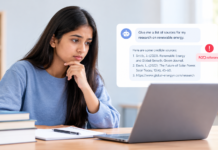



For decades, the multiple-choice question has been the workhorse of testing. It is fast to grade, easy to scale and simple to standardize. But it also has a well-known weakness: it often measures what students can recognize rather than what they can actually do.
Today, technology is giving educators better options. From AI-assisted feedback to immersive simulations, digital assessment trends are changing what we measure, how we measure it and how the results are used. This article looks at the most important shifts and what they mean for schools, universities and training organizations.
Why Multiple Choice Is No Longer Enough
Multiple-choice tests are not “bad.” They are efficient and can work well for checking foundational knowledge. The problem appears when they become the main or only way to judge learning.
Real-world skills such as writing, problem-solving, collaboration, creativity and critical thinking rarely come with four neat answer options. A student can pick the right option by elimination or good guessing without truly understanding a concept. Meanwhile, a student with strong reasoning skills may be penalized by a poorly worded question.
Employers and institutions also increasingly want evidence of applied skills. That demand is pushing assessment toward richer, more authentic formats, and digital tools are making those formats practical at scale.
Trend 1: Adaptive Testing That Responds to the Learner
Adaptive assessments adjust the difficulty of questions in real time based on how a student is performing. Answer correctly, and the next question gets harder. Struggle, and the system offers a more accessible one.
This approach has clear advantages:
- More precise measurement – fewer questions are needed to pinpoint a learner’s level.
- Less frustration – students aren’t stuck with items that are far too easy or far too hard.
- Better insight – results can highlight specific gaps rather than just a total score.
As platforms mature, adaptive testing is moving beyond large standardized exams into everyday classroom tools and corporate training programs.
Trend 2: AI-Assisted Scoring and Feedback
Artificial intelligence is making it possible to evaluate open-ended work, such as essays, short answers and spoken responses, much faster than a teacher could alone. AI tools can flag grammar issues, check structure, compare responses to a rubric and offer suggestions for improvement.
The real value lies in feedback. Instead of waiting days or weeks for a grade, learners can receive guidance almost immediately and use it to revise their work. That turns assessment into part of the learning process rather than a verdict delivered at the end.
There are important cautions, however:
- Human oversight matters. AI should support educators, not replace their judgment, especially for high-stakes decisions.
- Bias must be monitored. Models can reflect patterns in their training data, so regular audits are essential.
- Transparency builds trust. Students and teachers should understand how automated scoring works and how to challenge a result.
Trend 3: Simulations and Scenario-Based Assessment
Why describe a skill when you can demonstrate it? Simulations place learners in realistic situations: diagnosing a virtual patient, troubleshooting a network, managing a project budget or handling a difficult customer conversation.
These assessments capture more than a final answer. They can record the decisions a learner makes, the order they make them in and how they respond to consequences. That gives educators a window into reasoning and judgment that a traditional test can’t offer.
Virtual and augmented reality are extending this idea further, especially in fields like healthcare, engineering and skilled trades where hands-on practice is expensive or risky in the real world.
Trend 4: Portfolios and Performance-Based Evidence
Digital portfolios let students collect and showcase their work over time: essays, projects, videos, code, designs and reflections. Rather than a single snapshot on test day, a portfolio shows growth and range.
This is especially powerful when paired with clear rubrics and regular feedback. Students learn to evaluate their own work, set goals and explain their thinking, skills that matter well beyond the classroom.
Portfolios also connect naturally to competency-based learning, where progress depends on demonstrating mastery rather than spending a set amount of time in a course. Digital badges and micro-credentials are increasingly used to recognize these demonstrated skills in a portable, verifiable way.
Trend 5: Continuous and Formative Assessment
Another major shift is moving away from the “big exam” model toward ongoing, low-stakes checks. Quick quizzes, polls, exit tickets and interactive activities give teachers a steady stream of information about what students understand.
When combined with learning analytics dashboards, this data helps educators spot struggling learners early, adjust instruction and personalize support. The goal is less about ranking students and more about helping them improve while there is still time.
Trend 6: Secure and Flexible Online Exams
Remote and hybrid learning made online exams common, and with that came serious questions about integrity and fairness. Institutions have explored a range of approaches, from secure browsers and identity verification to question randomization and AI-based monitoring.
At the same time, many educators are asking a deeper question: instead of trying to police every exam, should we redesign assessments so that cheating is less useful? Open-book formats, project-based tasks, oral defenses and personalized prompts all make it harder to simply copy an answer and easier to see authentic understanding.
Privacy and accessibility are central here. Monitoring tools should be used proportionately, with clear communication, and assessments must work for students with disabilities and for those with limited connectivity or devices.
Trend 7: Data, Analytics and Personalized Learning Pathways
Every digital assessment generates data. Used well, that data can reveal patterns across a class, a school or an entire program. Which concepts are consistently misunderstood? Which students need extra help? Which teaching approaches are working?
The next step is using those insights to guide personalized learning pathways, recommending resources, practice activities or enrichment based on a learner’s results. The promise is powerful, but so are the responsibilities: strong data governance, student privacy protections and ethical use policies are essential.
Challenges to Keep in Mind
The future of digital assessment is promising, but it won’t arrive without obstacles.
- Equity and access – Not every student has reliable devices or internet. Solutions must avoid widening existing gaps.
- Teacher training – New tools only help when educators feel confident using them and designing good tasks.
- Validity and reliability – Innovative formats must still measure what they claim to measure, consistently and fairly.
- Cost and infrastructure – Smaller institutions may struggle to adopt advanced platforms.
- Over-reliance on technology – Tools should serve learning goals, not dictate them.
How Institutions Can Get Started
You don’t need to overhaul everything at once. A practical path might look like this:
- Clarify your goals. Decide which skills and outcomes matter most, then choose assessment methods that truly fit them.
- Start with a pilot. Test one new approach, such as a portfolio or an adaptive quiz, in a single course or department.
- Mix methods. Combine traditional questions with performance tasks and ongoing feedback for a fuller picture.
- Train and support staff. Give educators time and resources to learn and experiment.
- Protect students. Put clear privacy, accessibility and fairness policies in place from the beginning.
- Review and refine. Collect feedback from students and teachers, and adjust as you learn.
Conclusion
Multiple choice isn’t going away, but it is no longer the whole story. The most important digital assessment trends point toward richer evidence of learning: adaptive tests, AI-supported feedback, realistic simulations, portfolios and continuous insights.
The most successful approaches share a common thread. They treat assessment not just as a way to grade students, but as a tool to understand and support them. Technology makes this more achievable than ever, provided it is guided by sound teaching principles, fairness and care for the learner.
For educators and institutions, the opportunity is clear: use these digital assessment trends thoughtfully, and assessment can become one of the most powerful engines for learning.