




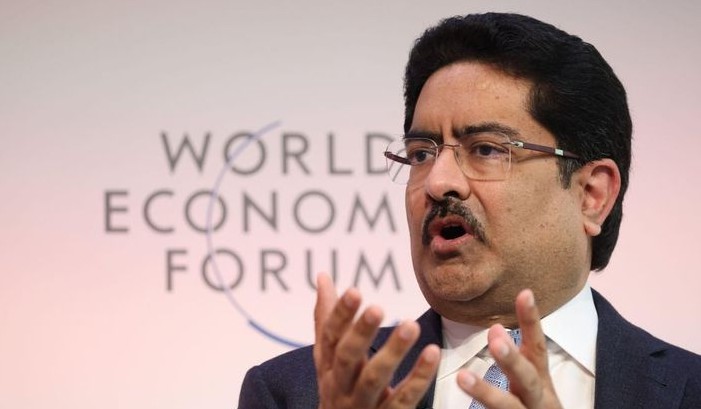
In a significant leadership development within India’s telecom sector, Kumar Mangalam Birla has been appointed as the non-executive chairman of Vodafone Idea Limited (Vi). The move comes at a critical time when the telecom operator is grappling with persistent financial stress, mounting debt, and intense market competition.
The appointment, effective May 5, 2026, marks Birla’s return to the role after nearly five years. His comeback is widely viewed as a strategic step aimed at stabilizing the company and restoring investor confidence in a business that has struggled to keep pace with rivals.
Leadership Transition at a Crucial Time
Vodafone Idea confirmed the leadership change through a regulatory filing, stating that Birla, who was already a non-executive director, would now take on the role of non-executive chairman. Meanwhile, Ravinder Takkar, who previously held the position, has stepped down and will continue with the company as non-executive vice-chairman.
This transition signals continuity rather than disruption, as both leaders remain part of the board. However, Birla’s elevation reflects the need for stronger promoter-level oversight as the company navigates one of the most challenging phases in its history.
A Telecom Giant Under Pressure
Vodafone Idea, formed in 2018 through the merger of Vodafone India and Idea Cellular, is currently India’s third-largest telecom operator. Despite its scale, the company has faced significant headwinds in recent years, including shrinking market share and heavy financial obligations.
One of the biggest challenges has been the burden of adjusted gross revenue (AGR) dues, a long-standing regulatory issue that has strained the company’s finances. Although recent government measures have provided some relief, the overall debt remains substantial.
Additionally, Vodafone Idea is under pressure from competitors such as Reliance Jio and Bharti Airtel, both of which have aggressively expanded their networks and rolled out 5G services. In contrast, Vi has struggled to invest at the same scale due to its financial constraints.
Market Reaction Signals Renewed Confidence
The announcement of Birla’s return was met with a positive response from the market. Vodafone Idea’s shares rose following the news, reflecting renewed investor optimism about the company’s future direction.
Analysts interpret this reaction as a sign that stakeholders expect stronger strategic leadership and improved governance under Birla. His track record as chairman of the Aditya Birla Group adds credibility to the company’s turnaround efforts.
The Road to Revival
Despite the positive sentiment, the road ahead for Vodafone Idea remains challenging. The company continues to carry a massive debt burden, including spectrum-related liabilities and deferred payments. It also faces the urgent need for capital infusion to upgrade its infrastructure and remain competitive in the 5G era.
Industry experts believe that Birla’s leadership could play a crucial role in securing funding and driving strategic partnerships. His return also indicates a stronger commitment from the Aditya Birla Group toward the company’s revival.
Moreover, Vodafone Idea has been working on multiple fronts to improve its financial health. These include restructuring liabilities, exploring fundraising options, and focusing on operational efficiency. The company is also aiming to reduce customer churn and strengthen its network quality to regain market share.
Strategic Importance of Birla’s Comeback
Kumar Mangalam Birla’s return is not just a leadership change, it is a signal of intent. Having previously stepped down from the role in 2021 amid financial uncertainties, his reappointment suggests renewed confidence in the company’s recovery prospects.
His presence is expected to enhance strategic decision-making and provide stability at the board level. This is particularly important as Vodafone Idea seeks to navigate regulatory complexities, competitive pressures, and evolving technological demands.
Furthermore, Birla’s global business experience and leadership across diverse sectors could help the telecom operator identify new growth opportunities and strengthen its long-term vision.
Challenges That Still Lie Ahead
While leadership changes can boost morale and investor confidence, they do not eliminate structural challenges. Vodafone Idea must still address several critical issues, including:
- High debt levels limiting investment capacity
- Intense competition from stronger telecom players
- Significant capital requirements for 5G expansion
- Ongoing customer retention challenges
These factors underline the complexity of the turnaround task ahead.
Outlook for Vodafone Idea
The appointment of Kumar Mangalam Birla as non-executive chairman represents a pivotal moment for Vodafone Idea. It underscores the urgency of the situation while also offering a potential path forward.
If executed effectively, the leadership shift could help the company stabilize its operations, attract investment, and gradually rebuild its competitive position. However, success will depend on a combination of strategic decisions, financial discipline, and favorable market conditions.
In the broader context, Vodafone Idea’s performance is crucial for maintaining healthy competition in India’s telecom sector. A strong third player ensures better pricing, innovation, and service quality for consumers.
Conclusion
Kumar Mangalam Birla’s return to Vodafone Idea’s leadership comes at a time when the company stands at a crossroads. While the challenges are significant, the move has injected fresh optimism into the organization and the market.
The coming months will be critical in determining whether this leadership change can translate into tangible progress. For Vodafone Idea, the stakes are high, but so is the opportunity to redefine its future in one of the world’s most competitive telecom markets.