



The rapid growth of AI in education is transforming how students learn and how educators deliver knowledge. Traditional textbooks and static lesson formats are gradually giving way to more dynamic, accessible, and personalised learning experiences. As learners increasingly consume content through audio and video platforms, Edutech leaders are rethinking how educational material should be presented in the digital age.
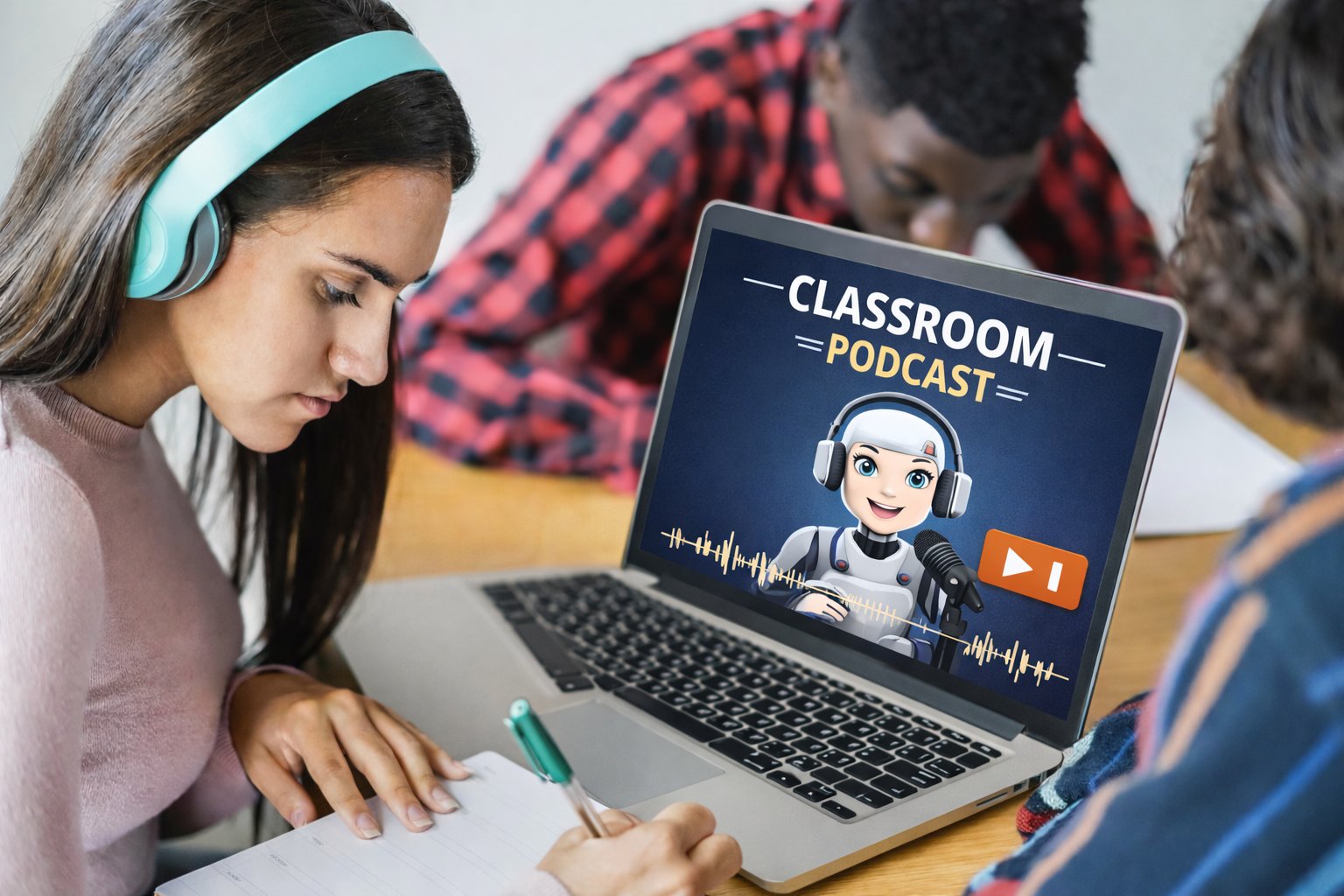
Google’s latest move reflects this shift. With a new Gemini-powered feature in Google Classroom, lessons can now be converted into podcast-style audio content. This innovation marks a significant step forward for AI in education, blending artificial intelligence with modern learning preferences to create more flexible and inclusive classrooms.
The Growing Role of AI in Education
Over the past decade, AI in education has evolved from experimental tools to essential classroom technology. From adaptive learning platforms and automated grading to personalized content recommendations, AI is helping educators address diverse learning needs at scale.
Today’s students are not limited to desks and textbooks. They learn while commuting, exercising, or multitasking. Audio-based learning fits naturally into these habits, making it an ideal extension of AI-driven Edutech solutions. By transforming lessons into podcasts, Google is aligning AI in education with real-world learning behaviors.
Google’s Gemini Tool: A New Chapter for AI in Education
Google’s Gemini Classroom tool introduces a practical use case for AI in education by converting written lesson content into audio formats. Educators can transform existing classroom materials into spoken lessons without requiring additional recording equipment or technical expertise.
This approach simplifies content creation while maintaining educational accuracy. Instead of replacing teachers, Gemini acts as a supportive AI assistant, enhancing lesson delivery and expanding how students access information. It demonstrates how AI in education can complement human instruction rather than compete with it.
Why Podcast-Based Learning Fits Modern Education
Podcast-style learning is gaining popularity beyond entertainment, and AI in education is accelerating this trend. Audio lessons allow students to revisit topics at their own pace, pause and replay complex explanations, and learn in environments where reading is not practical.
For learners with visual impairments or reading difficulties, audio-based education significantly improves accessibility. At the same time, for other students, it supports a wide range of learning styles. By doing so, the integration of podcast formats into classrooms demonstrates how AI in education helps remove learning barriers and, ultimately, promotes more inclusive learning experiences.
How AI in Education Enhances Personalization
One of the strongest advantages of AI in education is personalization. AI tools like Gemini can adapt content based on lesson complexity, subject matter, or learning objectives. Over time, these systems can also evolve to match individual student preferences.
Moreover, audio lessons powered by AI can be tailored in tone, pace, and structure, which in turn helps students engage more effectively. As a result, this level of personalization ensures that learning feels less generic and significantly more student-centric. Ultimately, such an approach supports one of the most essential goals of modern education systems, creating meaningful and inclusive learning experiences.
Benefits for Teachers and Educational Institutions
For educators, AI in education reduces repetitive tasks and increases instructional efficiency. Teachers no longer need to manually record or edit audio lessons. Instead, AI generates content quickly while preserving consistency across classrooms.
Educational institutions also benefit from scalable content delivery. Once a lesson is converted into audio, it can be reused, shared, and updated easily. This efficiency allows teachers to focus more on mentoring, discussion, and creative instruction rather than administrative work.
Challenges and Considerations in AI-Driven Learning
While the benefits of AI in education are significant, challenges remain. Audio-based learning should not replace critical reading and writing skills. Instead, it must complement existing teaching methods.
Data privacy and ethical AI usage are also important considerations. Schools must ensure that AI tools comply with data protection standards and maintain transparency in how content is generated. Responsible implementation is key to sustaining trust in AI in education platforms.
What This Means for the Future of AI in Education
Google’s move signals a broader trend: AI-driven, multimodal learning is becoming the norm. As AI in education continues to evolve, we can expect classrooms to adopt more flexible formats, combining text, audio, video, and interactive content.
Looking ahead, future Edutech innovations may include real-time AI tutors, voice-based assessments, and adaptive audio lessons tailored to individual learner progress. In this context, podcast-style learning represents just one example of how AI in education is actively reshaping the overall learning experience.
Conclusion
The introduction of podcast-style lessons through Google’s Gemini Classroom tool highlights the transformative power of AI in education. By turning traditional lessons into accessible, engaging audio content, Google is addressing modern learning needs while supporting educators and students alike.
As education continues to evolve, therefore, AI-driven tools will play an increasingly important role in making learning more inclusive, personalized, and flexible. Consequently, for educators, institutions, and Edutech innovators, this development sends a clear signal: AI in education is no longer the future; instead, it is the present.
I hope you find the above content helpful. For more such informative content, please visit EduTechReports.