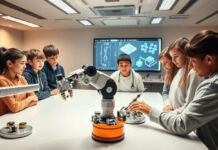


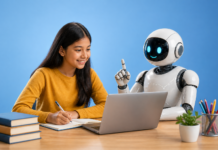


Artificial Intelligence (AI) is no longer a futuristic concept; it has entered our classrooms, reshaping how students learn and how teachers teach. From AI chatbots assisting with homework to platforms generating personalized study plans, these tools offer immense potential. But as with any powerful technology, unregulated use can bring unintended consequences. In this context, the United Nations has emphasized the need for age restrictions and guidelines for AI in schools. Their advisory highlights the delicate balance between innovation and responsibility.
AI in Classrooms: Opportunity Meets Challenge
AI has the potential to transform education. Intelligent tutoring systems, automated research assistants, and content generators can make learning more interactive, personalized, and accessible. For instance, students with learning difficulties can benefit from adaptive AI tools, while teachers gain insights into student progress without spending hours on administrative tasks.
However, the rise of generative AI in schools also raises questions. Are young learners prepared to critically evaluate AI outputs? Could overreliance on technology diminish creativity or critical thinking? The UN warns that without careful implementation, AI could expose children to biased information, digital manipulation, or even emotional harm.
Why Age Matters: The UN’s Advisory
UNESCO, the UN’s education agency, has called for clear age limits on AI usage in schools. Many existing platforms already have minimum age requirements, often set at 13, but experts argue that younger students may still be vulnerable. Discussions are ongoing about whether the minimum age should be raised to 16, depending on maturity and context.
Unleashing AI’s Potential: Learning Reimagined
Generative AI is not just a tool; it can be a learning companion. When used thoughtfully, it offers:
- Personalized Learning Paths – Tailoring content to each student’s pace, strengths, and weaknesses.
- Support for Special Needs – Providing adaptive assistance for students with diverse learning requirements.
- Stimulating Creativity – Offering new ideas, perspectives, and research prompts that encourage critical thinking.
- Empowering Educators – Automating routine tasks and providing actionable insights into student performance.
These possibilities illustrate that AI, if implemented responsibly, can enrich classrooms rather than diminish them.
The Dark Side of Convenience
Yet, AI comes with inherent risks. UNESCO highlights several key challenges:
- Ethical Concerns – AI can produce biased, inappropriate, or misleading content, which may affect young minds.
- Overdependence – Excessive reliance on AI might reduce students’ ability to think independently.
- Privacy and Data Security – Many AI tools collect user data, raising concerns about consent and protection.
- Digital Inequity – Unequal access to AI tools may widen existing educational gaps.
Awareness of these risks is essential to ensure that technology serves as a facilitator of learning, not a source of harm.
Guiding Principles for Safe AI Integration
UNESCO recommends a structured approach to integrating AI in schools:
- Age-Appropriate Implementation – Set minimum age limits and consider maturity levels.
- Teacher Supervision – Teachers should guide usage and contextualize AI outputs.
- Ethical Oversight – Ensure AI tools are transparent, safe, and free from bias.
- Community Engagement – Involve parents, students, and educators in policy formation.
- Balanced Adoption – Use AI to enhance learning, not to replace human judgment or interaction.
Global Implications: A Collective Responsibility
Countries worldwide are navigating the complexities of AI in education. While some have begun drafting regulations and guidelines, many are still unprepared for the rapid adoption of these technologies. UNESCO’s advisory serves as a timely reminder: integration of AI must be deliberate, collaborative, and ethical.
Policymakers, educators, and developers must work together to create frameworks that protect students while encouraging innovation. The goal is not to hinder technology but to ensure its responsible and equitable use.
Educators and Policymakers: Shaping the Future
Teachers are on the front lines of AI adoption. Proper training and understanding of AI’s capabilities and limitations are crucial. By guiding students to use AI as an aid rather than a crutch, educators can help develop critical thinking, problem-solving, and creativity.
Policymakers, meanwhile, must focus on:
- Establishing clear age limits and guidelines for AI in schools.
- Creating ethical, legal, and privacy frameworks.
- Ensuring equitable access to AI tools for all students.
Collaboration between educators, policymakers, parents, and technology developers is essential to strike the right balance between innovation and responsibility.
Striking the Right Balance
The UN’s advisory underscores a vital point: AI should enhance, not replace, human learning. Responsible integration involves understanding both opportunities and risks, ensuring students benefit without compromising their development.
When implemented thoughtfully, AI can make classrooms more dynamic, inclusive, and effective. Conversely, unchecked adoption could hinder critical thinking, creativity, and social learning, areas where human interaction remains indispensable.
Conclusion
AI in education represents a transformative opportunity. Yet, as the UN emphasizes, with great potential comes great responsibility. Age restrictions, ethical oversight, and collaboration between educators, parents, and policymakers are essential to protect students and guide technology toward positive outcomes.
By approaching AI with foresight, schools can harness its power to enrich learning while ensuring that human values, critical thinking, and creativity remain at the heart of education. Innovation and responsibility must go hand in hand, shaping a future where technology empowers students safely, equitably, and effectively.
I hope you find the above content helpful. For more such informative content, please visit EduTechReports.